
WHY DO CRYSTAL NAMES END IN 'ITE'? A Fun Guide to Crystal Names & Meanings ✨
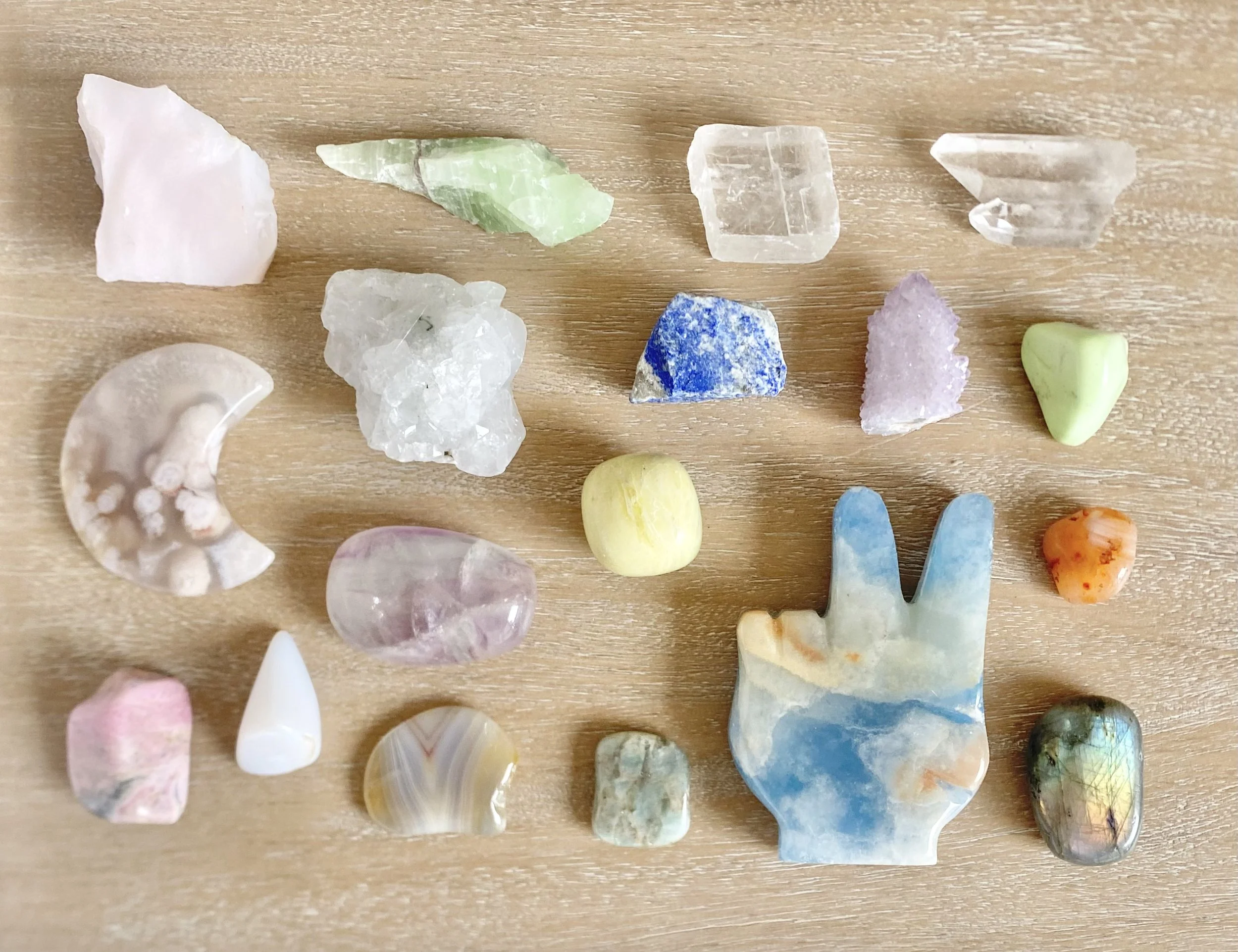
Why Do Crystals End in -ite? A Fun Guide to Crystal Names & Meanings
I have thought about this question a hundred times, and why I never googled it is beyond me! I had a sense of the origin but I finally did some digging and ended up deep in a rabbit hole. It was interesting and fun! I learned a lot and had to share some highlights with you guys.
The Big Question: Why do crystal names end in ‘ite’?
If you look at your collection and say the names out loud, you'll notice a pattern. Most end in ‘ite’. Fluorite, Pyrite, Calcite etc. But why? Historically, the suffix “ite” is derived from the Greek word ites, the adjectival form of lithos, which simply means “rock or stone”.
In modern times, the CNMNC (Commission On New Minerals Nomenclature and Classification) strongly recommends the suffix 'ite' to standardize mineral names. Whether it's a brand new discovery or a classic specimen, the ‘ite’ ending is the universal way to signify, "Yes, this is a mineral!" It’s a little piece of linguistic history that has stayed with us in perpetuity. Forever, fo’ eva eva. Sorry Outkast quote.
How do crystals get their names?
I’ve learned that it’s not just about the "ite"! Most crystals are named based on three things: the person who discovered them, the location where they were found, or their physical and chemical characteristics. Rad!
Here are three of my favorite stones and their examples:
Kunzite: Named after George Kunz, the chief jeweler at Tiffany & Co. in 1902. His name + the standardized ‘ite’ = Kunzite.
Prehnite: This beautiful, vivid light green crystal gets its name from its discoverer, Hendrik von Prehn.
Labradorite: Discovered in 1770 by Moravian missionaries on the Isle of Paul in Labrador, Canada. Back then, it was called the "Frozen Fire of Aurora Borealis" because it resembled the Northern Lights. We super LOVE Labradorite for all those magical rainbow-ish flashes, which is why we use it in all of our signature Wander Wild products. The Crystal Ritual Oil is a personal fav with bright flashes from both Labradorite and Moonstone.
What about the ones that don't end in 'ite'?
Take Carnelian , for example. It doesn't follow the "ite" rule. It was named after the Latin word carneus, meaning "fleshy," a nod to its varying shades of pink and red. Traditionally in Arab culture, this was a stone for Kings, symbolizing courage, bravery, and confidence. Today, we can all tap into that fiery energy -our vivid Carnelian crystals are a best seller in the shop.
And then there's Citrine! It skips the 'ite' trend entirely because its name comes from the French word citrin, meaning 'lemon-colored.' It’s named for its bright, sunny look rather than a person or a place—which fits perfectly with its joyful, abundance-boosting energy! This is one of the most sought after crystals in our shop. From carvings to jewelry to huge 21lb chunks, this is a must have mineral.
Whether you love them for their ite, their chemistry, their beauty, or their ability to make your living room feel like a chill sanctuary, crystals just remind us that there is magic in the details of Mother Nature.
Come Visit Tiny Bandit in Venice Beach!
While our online Crystal Shop is steadily expanding, there are SO MANY MORE crystals in our Venice Beach Studio Shop than we have listed online. Our obsession is moving much faster than our ability to take photos and write copy! Anyway thanks for the internet hang. We are always learning new details about the earth's treasured minerals and will be sure to share highlights again soon. Hope this wasn’t too nerdy but either way drop a comment with your favorite crystal.
Visit us in person someday soon and be sure to tell us the BLOG sent you! ;)
xo Heather